Deciphering the Label: How to Make Smarter Food Choices
September 2, 2026
Start with the Basics
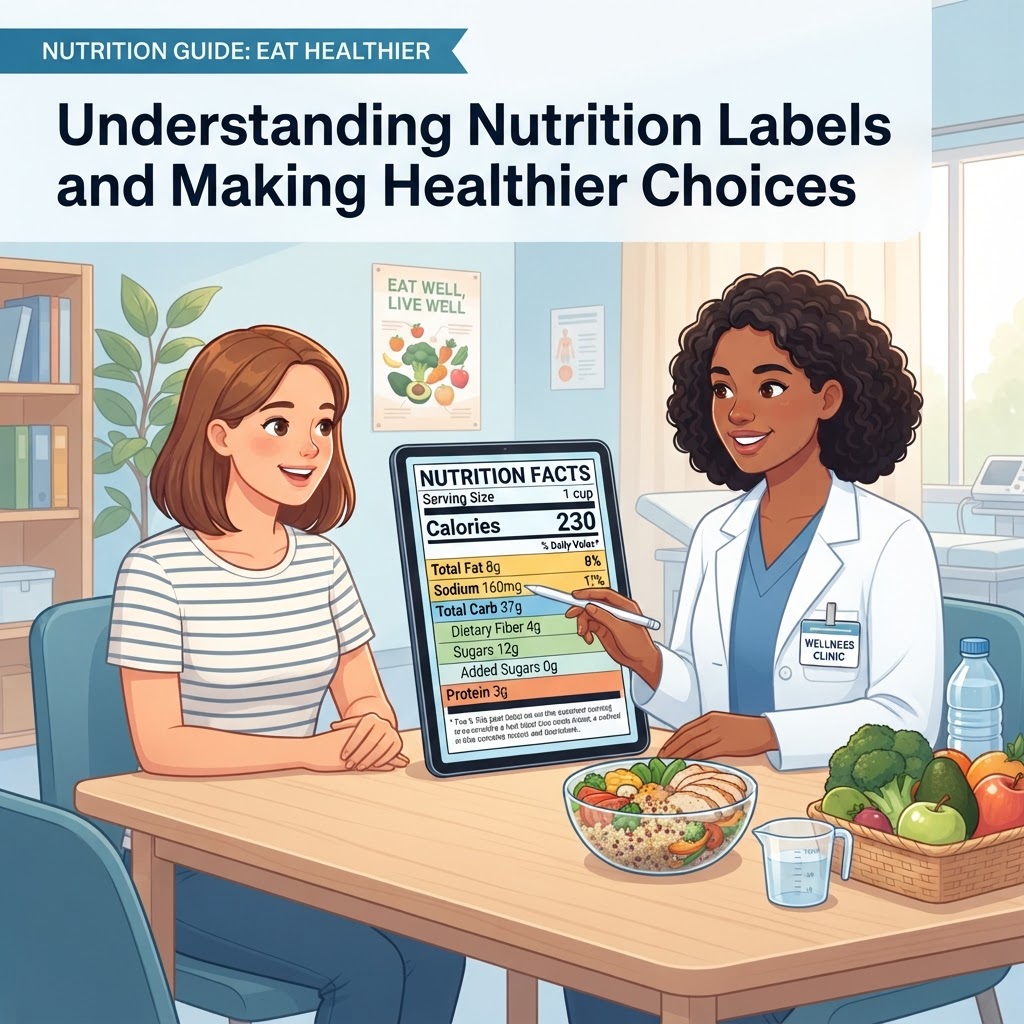
When browsing the grocery store aisles, the nutrition label is your best tool for understanding exactly what goes into your body. Begin by checking the serving size and servings per container, as all the numbers listed below are based on that specific portion. If you eat double the serving size, you are also doubling the intake of calories, fats, and sugars. Be wary of marketing terms on the front of the packaging like 'all-natural' or 'light'; these are often used to distract from the actual nutrient profile located on the back.
Focus on Key Nutrients
To make healthier choices, prioritize foods that are high in fiber, protein, vitamins, and minerals, while keeping an eye on saturated fats, sodium, and added sugars. The 'Percent Daily Value' (%DV) is a helpful guide: a rule of thumb is that 5% DV or less is considered low for a nutrient, while 20% DV or more is considered high. By consistently choosing products with lower amounts of added sugars and sodium, and higher amounts of fiber and essential nutrients, you can build a diet that supports your energy levels and long-term well-being.