Understanding Blood Pressure and Hypertension: What You Need to Know
September 12, 2026
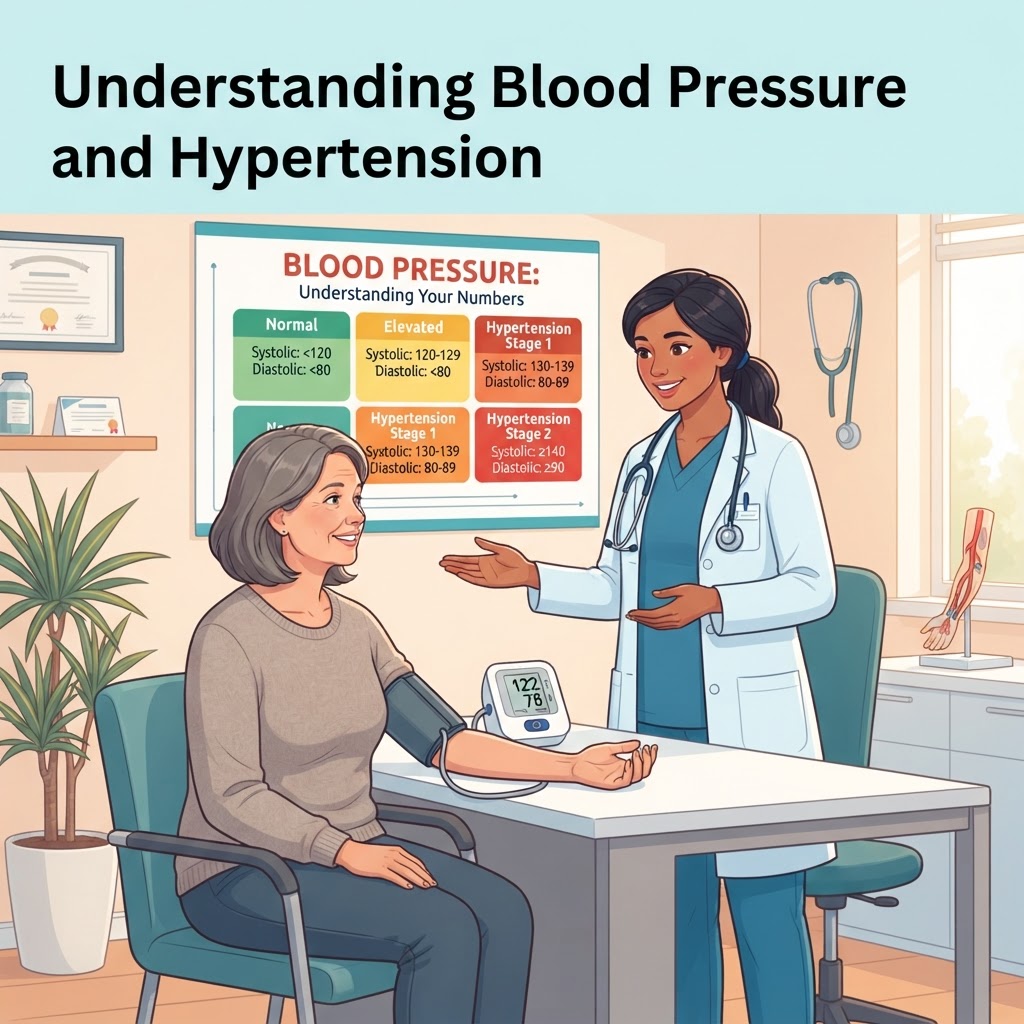
Blood pressure is the measure of the force of your blood pushing against the walls of your arteries as your heart pumps it through your body. It is recorded using two numbers: systolic pressure, which measures the force when your heart beats, and diastolic pressure, which measures the force when your heart rests between beats. A normal blood pressure reading is typically around 120/80 mmHg. When these numbers consistently remain high, it is diagnosed as hypertension, a condition that places extra strain on your heart and blood vessels, significantly increasing the risk of heart disease, stroke, and kidney damage.
Managing hypertension often starts with small but impactful lifestyle adjustments. Reducing sodium intake, engaging in regular physical activity, managing stress, and maintaining a healthy weight are foundational steps to bringing your numbers into a safer range. It is crucial to monitor your blood pressure regularly, as early detection allows for timely intervention. If lifestyle changes alone are not enough, healthcare providers may prescribe medication to help protect your long-term health. Always consult with your doctor to create a personalized plan that fits your specific needs and medical history.