Understanding Blood Pressure and Hypertension: What You Need to Know
September 19, 2026
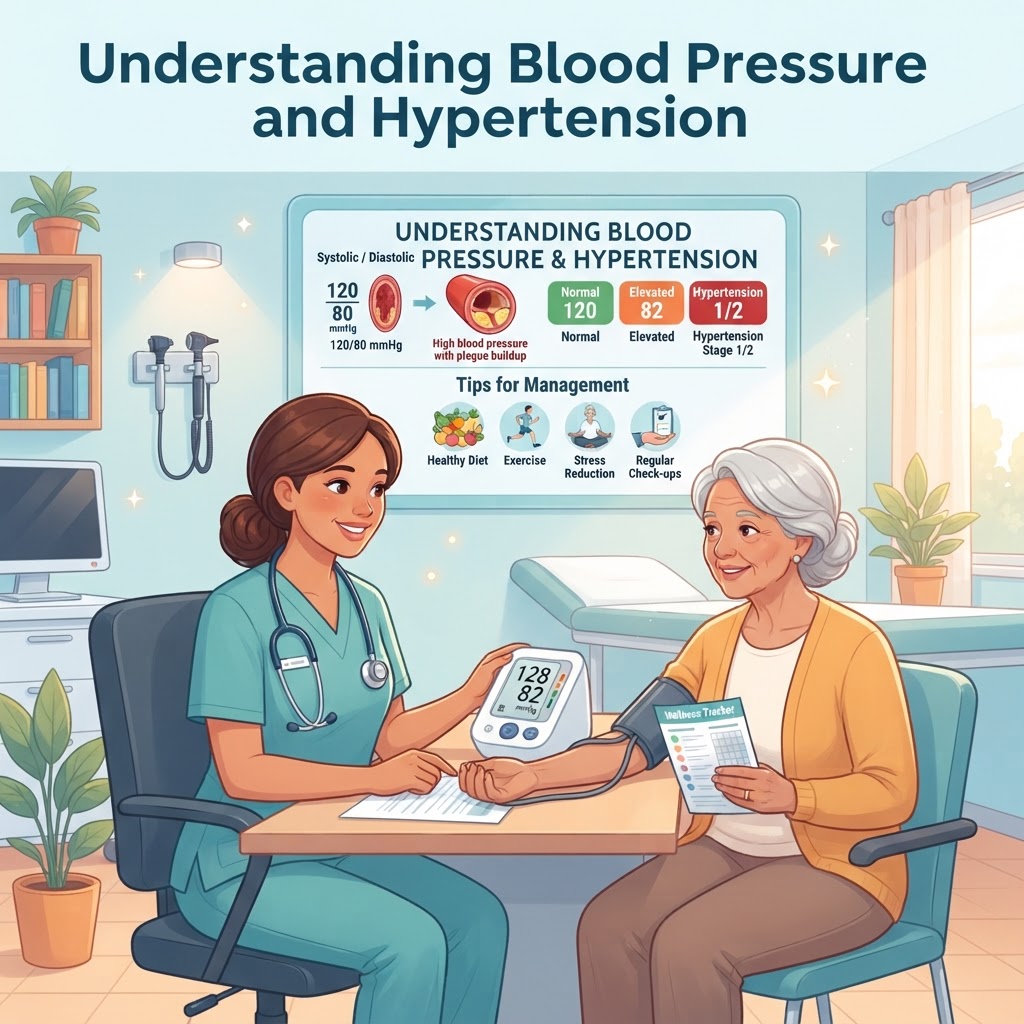
Blood pressure is the measure of the force exerted by your blood against the walls of your arteries as your heart pumps it through your body. It is recorded using two numbers: systolic (the pressure when your heart beats) and diastolic (the pressure when your heart rests between beats). A normal reading is typically around 120/80 mmHg. When these numbers consistently remain high, it is known as hypertension. Over time, elevated pressure can damage your blood vessels, leading to serious health complications like heart disease, stroke, and kidney failure.
Fortunately, hypertension is often manageable through lifestyle modifications and, when necessary, medical intervention. Adopting a heart-healthy diet low in sodium, engaging in regular physical activity, managing stress, and maintaining a healthy weight can significantly lower your numbers. Because high blood pressure rarely has noticeable symptoms, the most important step you can take is to monitor it regularly. Whether at home with a digital cuff or during your annual check-up, knowing your numbers empowers you to take control of your heart health before complications arise.