Understanding Blood Pressure: Your Guide to Heart Health
October 16, 2026
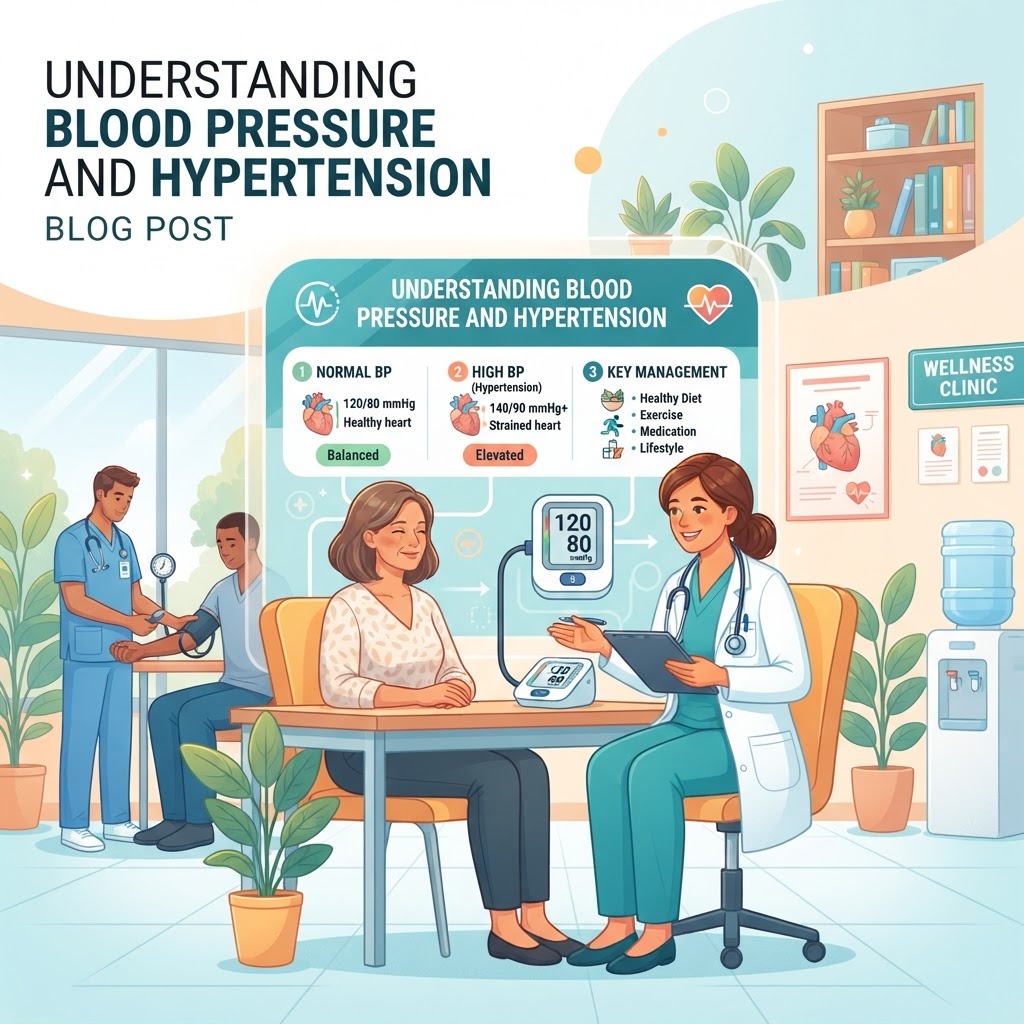
Blood pressure is the measure of the force of your blood pushing against the walls of your arteries as your heart pumps it through your body. It is recorded using two numbers: systolic pressure, which measures the pressure when your heart beats, and diastolic pressure, which measures the pressure when your heart rests between beats. A normal reading is generally considered to be around 120/80 mmHg. When these numbers remain consistently high, it is referred to as hypertension, or high blood pressure.
Hypertension is often called the silent killer because it typically presents no obvious symptoms while it slowly damages your blood vessels, heart, and kidneys. If left unmanaged, it significantly increases the risk of serious health complications, including heart attacks and strokes. The good news is that hypertension is highly manageable through lifestyle adjustments such as maintaining a balanced, low-sodium diet, engaging in regular physical activity, managing stress levels, and avoiding tobacco use. Regular monitoring at home or during doctor visits is the first step toward taking control of your cardiovascular wellness.